THE WORLD IS MADE TO PLAY. — DISCOVER QIYRO


Custom Padel Rackets: Your Complete Guide

Custom padel rackets give players, clubs, and sports brands more control over how a racket feels, performs, and looks.
This guide explains what matters in padel racket customization, from shape and balance to surface finish and branding, so you can make a clearer brief before speaking with a custom padel racket manufacturer. If you are planning a private-label line, a club order, or a personalized performance racket, the goal is the same: choose specifications that match the player and the purpose.
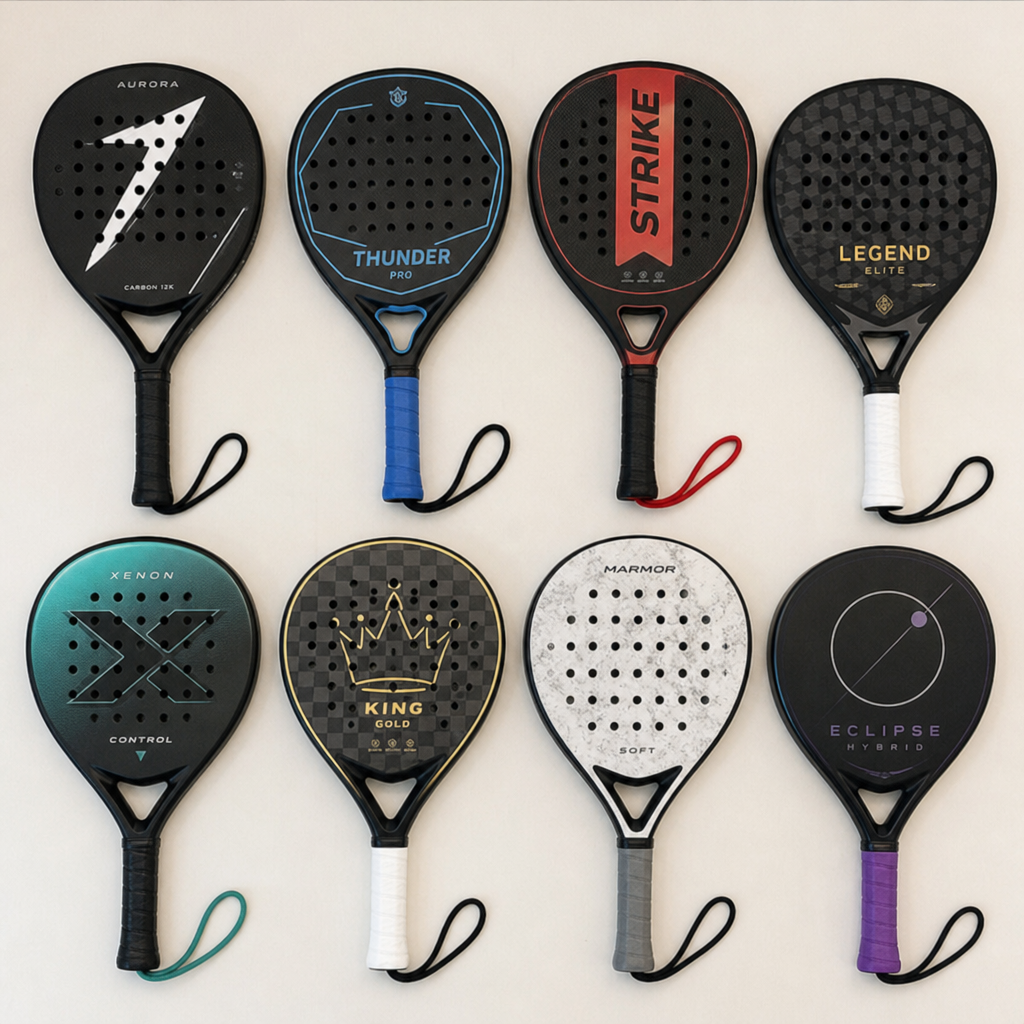
Table of Content
Hide
What should you customize in a padel racket?
You should customize the parts that affect playability first, then refine the appearance and branding. The most important choices are racket shape, weight, balance, core feel, face material, surface texture, grip, and visual design. A strong custom padel rackets project starts with the player profile: beginners often need comfort and control, while advanced players may want a more demanding racket with extra power, spin potential, or a firmer response.
The practical question is not “how many features can we change?” It is “which changes will make the racket easier to sell, easier to use, or better suited to the target player?” A well-built brief prevents confusion, reduces unnecessary revisions, and helps a manufacturer recommend realistic options.
Custom padel rackets built around the player
A racket that looks impressive but feels wrong will not create repeat demand. Before choosing graphics or packaging, define the type of player the racket is meant for. A club might want a forgiving model for lessons and member sales. A sports retailer may need several versions at different playing levels. A competitive player may care most about balance, stability, and response on fast volleys.
Key customization decisions usually include:
- Shape: Round rackets generally support control and a larger sweet spot, while teardrop and diamond shapes are often chosen for more attack-focused play.
- Weight range: Lighter rackets can feel easier to maneuver; heavier models may feel more stable but can be harder to handle for some players.
- Balance point: Lower balance improves control and comfort, while higher balance can support more powerful overhead shots.
- Core feel: Softer cores can help with comfort and rebound; firmer cores may suit players who prefer precision and direct feedback.
- Face material: Fiberglass and carbon-style constructions are commonly selected based on desired feel, durability expectations, and target price position.
- Surface texture: Textured or rough surface finishes may influence ball interaction and spin potential, although the actual effect depends on the racket’s overall construction and playing technique.
These choices work together. For example, a heavy diamond-shaped racket with high balance and firm response may suit an aggressive player, but it could feel tiring for someone still developing technique. A more rounded, manageable setup can make the game more enjoyable for a wider audience.
Design and branding that support the sale
Visual customization is where the racket becomes recognizable. Colors, logos, typography, decals, surface finish, and packaging all influence how the product is perceived before anyone steps onto the court.
For clubs, a custom design can make coaching programs, tournaments, and pro-shop sales feel more professional.
For brands, it can turn a racket into a clear product line instead of a generic item with a logo added late.
A useful design brief should include:
- Brand assets: Logo files, color references, font preferences, and any visual rules that must be followed.
- Target buyer: Beginner, intermediate, advanced, junior, club member, coach, retailer, or promotional customer.
- Design direction: Minimal, premium, bold, technical, colorful, classic, or performance-led.
- Product positioning: Entry-level, mid-range, premium, team model, event edition, or private-label collection.
- Packaging needs: Sleeve, box, hang tag, barcode area, care card, or other retail-ready elements.
Good padel racket customization keeps the design attractive without ignoring practical use. A racket handled daily should have branding that remains clear, grip colors that make sense for the audience, and packaging that suits how it will be sold or delivered.
From idea to sample approval
A custom padel racket manufacturer will usually need clear direction before quoting or producing samples. You do not need every technical answer at the beginning, but you do need a usable starting point. The more specific your goals are, the easier it is to avoid a sample that looks right but plays wrong.
A simple process can look like this:
- Define the purpose: Personal use, club resale, team order, promotional campaign, or private-label launch.
- Choose a player profile: Control-focused beginner, all-round intermediate, power player, coach, junior, or advanced competitor.
- Set core specifications: Shape, approximate weight, balance preference, face material, grip style, and finish.
- Prepare visual direction: Logo, colors, example designs, packaging preferences, and any required text.
- Request a sample: Review both appearance and on-court feel before approving a larger order.
- Refine before production: Adjust weight feel, graphics, texture, grip, or packaging details if needed.
Think of the sample as a decision tool, not just a preview. Test how it feels during warm-ups, volleys, bandejas, smashes, defensive lobs, and longer rallies. If several people represent the target customer, let them compare notes before final approval.
Choosing the right custom padel racket manufacturer
The right manufacturing partner should help turn your idea into a practical product, not simply ask for artwork and produce the nearest available option. Look for clear communication, realistic customization options, sample support, and a willingness to explain trade-offs. If a specification affects comfort, durability, or cost, you should understand that before production begins.
When comparing suppliers, ask about:
- Available molds, shapes, materials, surface textures, and finish options
- Minimum order requirements and whether samples are available
- Artwork setup, logo placement, color matching, and packaging support
- Lead times for sampling, revision, and bulk production
- Quality checks for appearance, weight consistency, grip, finish, and packaging
- Export, labeling, and shipping documentation support when relevant
A good supplier conversation should leave you with fewer unknowns. If you are building a product for resale, clarity matters even more because the racket has to satisfy buyers, fit your brand, and arrive in a condition suitable for sale.
Practical uses for custom padel rackets
Custom padel rackets are useful in more situations than one-off personal designs.
- Clubs can create branded rackets for members, coaches, academies, and tournaments.
- Retailers can develop an exclusive range that fits their customer base.
- Coaches can use custom models for lessons, player development, or branded merchandise.
- Companies can also create rackets for events, employee gifts, or sports-related promotions.
Here are common starting points:
- Club identity: A racket that matches club colors and supports member loyalty.
- Private-label product: A custom range designed for a retailer, distributor, or sports brand.
- Team or academy model: A consistent racket for training groups, coaches, or sponsored players.
- Event edition: A limited design for tournaments, corporate events, or padel activations.
- Player-specific build: A personalized setup based on playing style, comfort needs, and design taste.
The best option depends on how the racket will be used after delivery. A promotional racket may prioritize memorable branding, while a retail racket must balance feel, quality perception, packaging, and repeat purchase potential.
Start with a clear custom racket brief
The easiest way to move from interest to production is to prepare a short brief before requesting a quote. Include who the racket is for, the playing style you want to support, the quantity range you are considering, and the type of design you have in mind. If you already have a logo, color palette, or reference racket, include those details too.
Ready to explore custom padel rackets for a club, brand, team, or campaign? Prepare your brief and contact a custom padel racket manufacturer to discuss materials, samples, artwork, timelines, and production options. A focused conversation now can save revisions later and help you create a racket that looks professional, feels intentional, and suits the people who will actually play with it.
[…] This guide explains the main options, with a practical focus on OEM padel rackets, customisation decisions and the steps involved in creating your own branded products. […]