THE WORLD IS MADE TO PLAY. — DISCOVER QIYRO


How to Choose the Right Padel Racket Shape

Choosing the right padel racket shape is an important starting point, but shape alone does not determine performance.
Round, teardrop and diamond rackets are commonly associated with different balance characteristics, sweet spot positions and playing styles. However, the final playing experience also depends on racket weight, weight distribution, EVA core density, surface materials, frame construction and hole patterns.
In this guide, we explore the three main padel racket shapes and explain how players, clubs, retailers and distributors can make more informed product decisions.
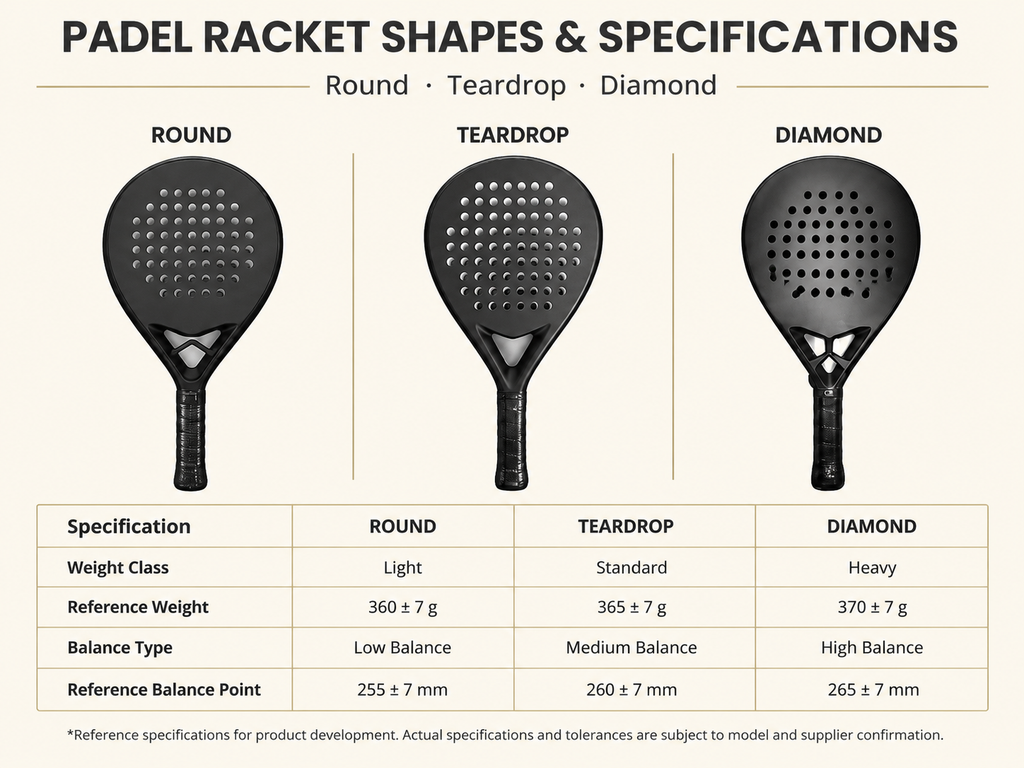
Table of Content
Hide
Which padel racket shape is right for your game?
The right padel racket depends on a player’s technique, playing style, physical preferences and experience level. Round rackets are often associated with manoeuvrability and control, teardrop rackets with versatile performance, and diamond rackets with attacking-oriented designs. These are general tendencies rather than fixed rules.
Two rackets with the same shape can feel very different. Total weight, balance point, swing weight, EVA core hardness, face materials, frame construction and drilling patterns all influence comfort, power, control and forgiveness. Players should evaluate the complete racket specification rather than relying on shape alone.
Padel racket types at a glance
The three main padel racket shapes are round, teardrop, and diamond. Each shape is commonly associated with different balance characteristics, sweet spot positions and playing styles. However, these characteristics also depend on the racket’s overall design, materials and weight distribution.
| Racket shape | Control | Power | Balance | Sweet spot size | Best player level |
|---|---|---|---|---|---|
| Round | High | Low to medium | Low balance, closer to the hand | Often larger and more central | Beginner to intermediate; control players |
| Teardrop | Medium to high | Medium to high | Medium balance | Often positioned around the middle to upper area | Intermediate to advanced; all-round players |
| Diamond | Medium to low | High | High balance, toward the head | Often higher and more concentrated | Advanced; attacking players |
These are general design tendencies, not fixed technical standards. Actual balance, power, control and sweet spot characteristics vary depending on the racket’s complete construction and specifications. Always refer to the individual model’s technical data and, where possible, on-court testing.
Use this table as a starting point rather than a fixed rule. A soft diamond racket can still feel manageable, while a heavy round racket may feel demanding. For B2B buyers, it is useful to offer more than one shape because players at different levels look for different benefits.
What makes a round padel racket easier to control?
Round padel rackets are commonly designed with a control-oriented playing experience in mind. Many models feature a relatively low balance point and a forgiving hitting area, which can make them easier to manoeuvre during defensive shots, volleys and quick exchanges.
However, not every round racket performs in the same way. A heavier round racket with a firmer core or different weight distribution may feel more demanding than a lighter model. The choice should therefore consider the complete specification, not simply the outline of the racket.
Round rackets can suit beginners as well as experienced players who prioritise placement, consistency and manoeuvrability.
Why do many players choose a teardrop shape?
Teardrop padel rackets are popular because they often offer a versatile combination of control and attacking potential. Many models are designed with a medium balance, although the exact balance varies between manufacturers and constructions.
This versatility makes teardrop rackets attractive to players who want one racket for defensive rallies, volleys and overhead shots. However, core hardness, racket weight, face materials and swing weight can significantly change how an individual model feels.
Teardrop rackets are often suitable for developing and experienced players, but suitability should always be assessed according to the player’s needs and the specific racket design.
Diamond rackets are built for attacking play
Diamond-shaped padel rackets are frequently associated with attack-oriented designs. Many models have a relatively high balance point, which may support powerful overhead shots and aggressive play when matched with suitable technique.
A higher balance can also affect manoeuvrability and make a racket feel more demanding during fast defensive exchanges. However, the actual experience depends on total weight, swing weight, core density, surface construction and other design factors.
Diamond rackets are often chosen by experienced attacking players, but they are not exclusively intended for professionals. The most suitable choice depends on the individual model and the player’s ability, comfort and preferences.
How should buyers plan a balanced racket range?
For clubs, retailers, distributors and emerging padel brands, building a successful racket range starts with understanding the target customers rather than selecting shapes alone.
Key considerations include:
- Target players: Experience level, playing preferences and local market demand.
- Product positioning: Entry-level, mid-range or premium collections.
- Technical specifications: Weight, balance point, EVA core, face materials, frame construction and hole patterns.
- Product range: Whether round, teardrop, diamond or a focused selection best serves the intended customers.
- Customization: Branding, colours, surface finishes, grip details and packaging.
- Sampling: Physical evaluation and on-court testing before confirming larger production quantities.
A balanced product range does not necessarily require every racket shape. The right selection depends on market demand, price positioning and the intended playing experience.
QIYRO helps B2B buyers explore racket models, material options and customization possibilities to develop product ranges suited to their target markets.
Practical tips before choosing a racket shape
Before choosing a padel racket, consider the following questions:
- What is the player’s experience level and preferred playing style?
- What total weight and balance feel comfortable?
- How do the EVA core and face materials affect the desired playing experience?
- Does the racket offer suitable manoeuvrability, comfort and consistency?
- Has the specific model been evaluated through samples or on-court testing?
Racket shape is a useful starting point, but the best decision comes from evaluating the complete product.
FAQ
Is a round padel racket only for beginners?
No. A round racket is beginner-friendly, but many experienced players use it for control, fast reactions, and consistency. It is a smart option for anyone who values precision.
Is a teardrop racket the safest option for retail buyers?
Not necessarily. Teardrop rackets are often versatile, but the right retail selection depends on customer preferences, price positioning and product specifications. Retail buyers should evaluate local demand rather than assuming one shape is suitable for everyone.
Should B2B clients order every shape?
No. B2B buyers should select racket shapes according to their target customers, market demand and product positioning. A focused range of well-selected models may be more effective than offering every shape.
Can racket shapes be customized for OEM/ODM projects?
Yes, depending on available moulds, manufacturing capabilities and project requirements. Buyers can explore existing round, teardrop and diamond mould options, while developing a new racket shape may require additional tooling, cost and development time.
QIYRO can help buyers discuss available models and customization requirements with suitable manufacturing partners.
[…] Round rackets generally support control and a larger sweet spot, while teardrop and diamond shapes are often […]