THE WORLD IS MADE TO PLAY. — DISCOVER QIYRO


How Are Pickleball Paddles Made?
Learn how pickleball paddles are made, from material preparation and core assembly to molding, custom printing, grip installation, and quality inspection.

Table of Content
Hide
How Are Pickleball Paddles Made?
Pickleball paddles are made by preparing face materials, cutting the face and core to the required shape, bonding the layers together, pressing or molding the structure, finishing the edges and surface, adding graphics, building the handle, and inspecting the finished product. For international sports brands, clubs, retailers, distributors, and business buyers, understanding this process helps make better decisions about paddle construction, customization, sampling, packaging, and quality expectations when working with QIYRO SPORTS.
How pickleball paddles are made from design to finished product
A pickleball paddle typically starts with a product specification: target shape, weight range, face material, core type, handle length, grip size, surface finish, artwork, and packaging requirements. From there, the manufacturing process moves through material preparation, cutting, assembly, pressing or molding, trimming, finishing, printing, handle work, and final inspection.
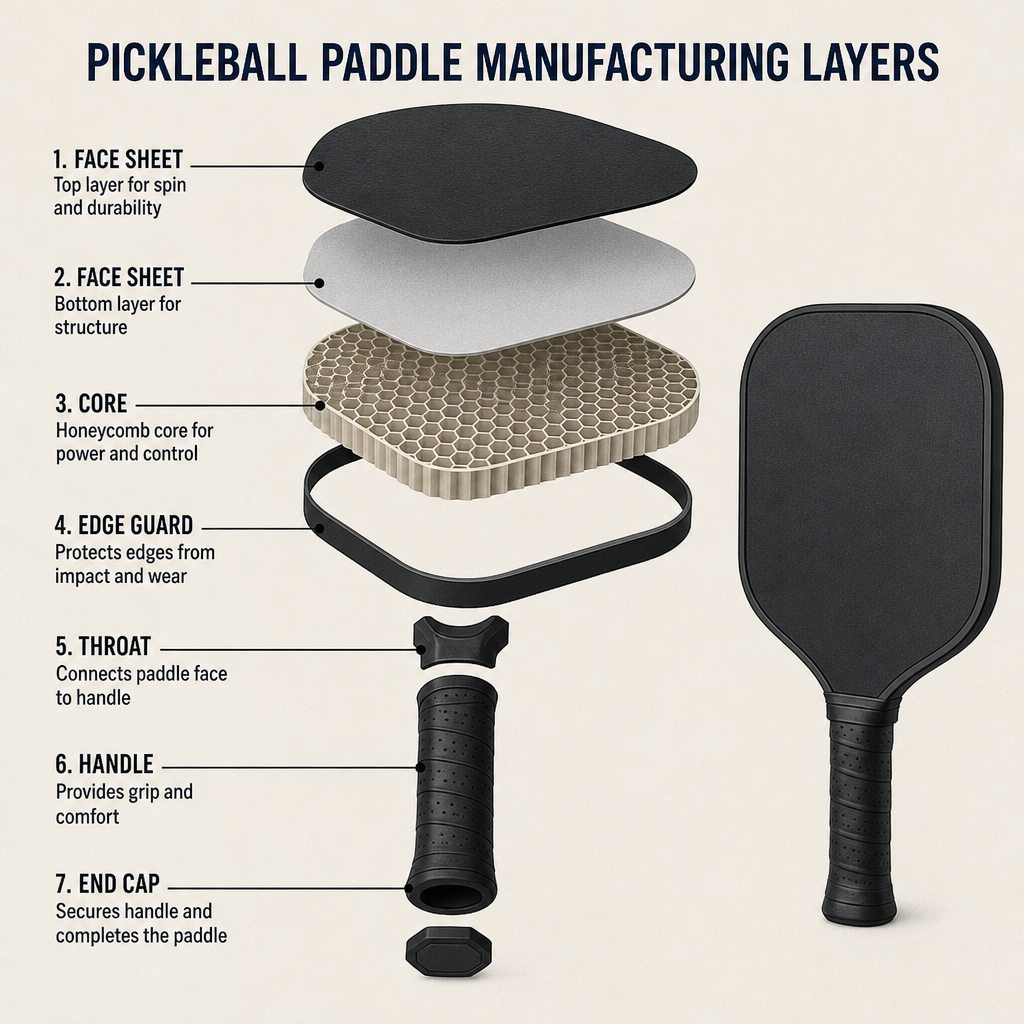
Construction methods vary because not every paddle is designed the same way. A traditional sandwich-style paddle may use separate face sheets bonded to a honeycomb core, while thermoformed or specialized designs may involve different edge structures, perimeter reinforcement, or molding steps. For business buyers, the most important point is that design choices affect production flow, sampling, appearance, feel, and cost planning.
Material Preparation
Material preparation sets the foundation for paddle performance, appearance, and consistency. Common face materials include carbon fiber and fiberglass. Carbon fiber is often selected for a premium look and a firmer, responsive feel, while fiberglass is commonly used when brands want a lively playing surface and strong graphic flexibility.
The core is usually a polypropylene honeycomb, often called a PP honeycomb core. This structure uses a grid-like internal layout to keep the paddle lightweight while supporting the face layers. Other core options may be used for specific designs, but they should be discussed as part of the product specification rather than assumed as standard.
For some paddle constructions, fabric preparation matters. Carbon fiber or fiberglass sheets may be supplied as woven fabric, pre-prepared sheets, or surface layers suitable for lamination. Fiber weaving details are most relevant when the visible texture, stiffness direction, or face construction is part of the design brief. If the paddle uses a printed top surface over a prepared substrate, the buyer may care more about surface smoothness, bonding compatibility, and graphic quality than the weave itself.
Cutting and Layer Preparation
After materials are selected, the face sheets and core components are cut to match the required paddle shape and specifications. The cutting stage must account for the outline, handle geometry, edge allowance, and any process margin needed for later trimming. This is where a brand’s approved shape becomes a production-ready part rather than just a drawing.
For custom pickleball paddle manufacturing, this step is especially important because small design differences can affect the final product. A club paddle may use a classic shape with a comfortable handle, while a retail line may include elongated profiles, different grip lengths, or a distinctive silhouette. The face materials, core, and reinforcement pieces must be prepared in a way that supports the selected construction method.
A practical B2B specification should clarify:
- Paddle shape and overall dimensions
- Target weight range and balance preference
- Handle length and grip circumference
- Face material and surface finish
- Core material and thickness category, if applicable
- Edge style and color direction
- Artwork position and branding requirements
Core and Face Assembly
Core and face assembly is the stage where the paddle begins to take its final structure. In a traditional sandwich construction, the core is placed between face layers, and adhesives are used to bond the materials into a unified panel. The goal is clean alignment, stable bonding, and a consistent structure across the paddle surface.
Adhesives, layering methods, and reinforcements vary by paddle design. Some paddles may use additional edge reinforcement, throat-area support, or surface layers depending on the desired feel and durability target. Thermoformed or specialized models may require different assembly planning than a simple sandwich construction because the edge structure and molding behavior can change how the materials are prepared.
Business buyers should not treat one assembly method as universally better. Instead, the construction should match the intended market position. For example, a retailer’s entry-level paddle line may prioritize reliable consistency and attractive graphics, while a performance-oriented brand may focus on a specific face material, handle feel, and surface response.
Molding, Pressing and Shaping
Molding, pressing and shaping help bond the paddle structure and form it into a stable finished blank. Heat pressing is commonly associated with laminated paddle constructions, where face layers and core materials are pressed together under controlled production conditions. Molding may be used when the design requires more defined shaping or additional control over the paddle outline and edge area.
Thermoforming is a specialized approach used for certain paddle designs, not a universal method for all paddles. In thermoformed constructions, production may involve shaping materials around the perimeter or integrating edge characteristics differently from a traditional sandwich paddle. This can influence the feel, structure, and manufacturing steps, so buyers should confirm whether a design is traditional, thermoformed, or another specialized construction before approving a sample.
Production methods differ by paddle type. A standard promotional paddle, a private-label retail paddle, and a premium performance paddle may move through similar broad stages, but the details of pressing, molding, reinforcement, and finishing can be different. QIYRO SPORTS can be approached with a clear product brief so the manufacturing route is aligned with the intended paddle design.
Trimming and Surface Finishing
Once the paddle blank has been formed, excess material is trimmed from the perimeter. Trimming refines the paddle outline and helps prepare the edge for later finishing. The goal is to bring the paddle into its intended shape while keeping the face, edge, and handle areas clean and consistent.
Sanding and edge finishing are then used to smooth rough areas and prepare the product for the next stage. Depending on the design, this may include refining the perimeter, smoothing transition points, and preparing the surface for graphics or treatments. Surface preparation is particularly important when the paddle will receive UV printing, decals, coatings, or texture-related finishing.
For business buyers, finishing quality affects how customers perceive the product. Uneven edges, visible defects, or poor surface preparation can make a paddle feel less professional even if the underlying materials are suitable. This is why the finishing stage should be considered part of product quality, not just cosmetic cleanup.
Printing and Custom Branding
Printing and custom branding turn a manufactured paddle blank into a market-ready product. UV printing is a common option for applying detailed graphics, logos, color blocks, model names, and branded visual designs to the paddle face. It is useful for sports brands and retailers because it supports clear artwork reproduction and flexible design customization.
Custom branding may include front and back graphics, club logos, retail collection colors, private-label model names, edge guard colors, grip colors, and packaging design. A distributor might request a clean logo-focused layout for multiple markets, while a club may prefer team colors and a bold identity. A retail brand may need coordinated graphics across several paddle models in the same product family.
Before production, artwork should be reviewed in the correct template and approved through a sample or digital proofing process. Buyers should confirm color expectations carefully, as screen colors and finished product colors can appear different. Clear artwork files, logo placement instructions, and packaging requirements help reduce delays during production.
Handle Construction and Grip Installation
Handle construction affects comfort, control, and the buyer’s perception of quality. The handle area is prepared according to the paddle design, then shaped and finished to support the selected grip size and handle length. End-cap installation is normally completed before or during the grip finishing stage, depending on the construction and assembly flow.
Grip wrapping gives the handle its final touch point. Brands may choose standard grip materials, colors, textures, and wrapping styles, while some programs may include overgrip options for retail bundles, club packages, or promotional sets. Grip selection should match the target user: a beginner-friendly club paddle may need a comfortable, approachable grip, while a premium retail paddle may require a more refined handle feel.
Protective packaging is also part of the final handling process. Finished paddles may be placed in sleeves, bags, cartons, or customized retail packaging depending on the order requirement. For international shipping and distribution, packaging decisions should consider product protection, barcode needs, labeling, presentation, and carton planning.
A Closer Look at Paddle Handle Processing
Handle preparation and grip installation are important finishing steps in pickleball paddle manufacturing. The linked video offers a closer look at selected handle-processing techniques, illustrating how small details contribute to the finished paddle’s comfort and usability.
Watch the Paddle Handle Processing Video →
Quality Inspection
Quality inspection checks whether the finished paddle matches the approved requirements. General inspection considerations include weight, balance, dimensions, surface appearance, edge finishing, handle alignment, grip wrapping, print quality, and bonding quality. These checks help identify visible defects, inconsistent finishing, or production variations before goods are packed and shipped.
Bonding quality is especially important because the paddle relies on stable connection between the core, face layers, and any reinforcement areas. Inspectors may review the paddle for signs of poor adhesion, uneven surfaces, cosmetic flaws, or abnormal handling feel. Dimensional checks help confirm that the paddle shape, thickness category, and handle area follow the approved specification.
It is important to distinguish general inspection principles from factory-verified procedures. The checks above describe common quality considerations in pickleball paddle manufacturing, but each production order should define its own inspection standard, acceptable tolerances, sampling method, and packaging review process. Business buyers should confirm these details with QIYRO SPORTS during sample approval and before bulk production.
What Should Brands Confirm Before Custom Production?
Brands should confirm the full product specification before custom production begins. This includes face material, core type, construction method, shape, handle design, target weight range, surface finish, artwork, packaging, and inspection expectations. A clear specification reduces misunderstandings and helps align the sample with the intended market.
Key items to confirm include:
- Material specifications: Choose carbon fiber, fiberglass, or other suitable face options, and confirm the core type for the intended paddle level.
- Paddle construction: Decide whether the design is a traditional sandwich construction, thermoformed model, or another specialized structure.
- Custom graphics: Provide logos, colors, artwork files, model names, and layout instructions in the required format.
- Sample approval: Review a physical sample or approved proof before committing to bulk production.
- MOQ: Confirm the minimum order quantity for the selected customization level, because different materials, printing methods, and packaging choices may affect order planning.
- Production lead times: Discuss expected timelines for sampling, revision, bulk production, and shipping preparation without assuming every order follows the same schedule.
- Packaging: Define retail boxes, sleeves, labels, barcodes, carton marks, and protection requirements for international distribution.
- Quality requirements: Agree on inspection points, appearance standards, weight and dimension checks, and documentation needs where applicable.
This preparation is valuable for sports brands launching a private-label line, clubs ordering branded paddles, retailers building seasonal assortments, and distributors serving multiple markets. The clearer the brief, the easier it is to manage cost, sampling, branding, and delivery expectations.
Frequently Asked Questions
1.How are pickleball paddles made?
Pickleball paddles are typically made by preparing face and core materials, cutting components, bonding or molding the structure, finishing the surface, applying graphics, installing the grip, and inspecting the finished product. The exact process varies by paddle construction.
2.What materials are commonly used to make pickleball paddles?
Common face materials include carbon fiber and fiberglass. Polypropylene honeycomb is widely used for paddle cores, while specialized designs may use alternative core constructions.
3.Can pickleball paddles be customized for a brand?
Yes. Depending on the selected construction and production requirements, customization may include paddle shape, face materials, graphics, logos, grip colors, and packaging. Sampling and specifications should be confirmed before bulk production.
Conclusion
Pickleball paddles are made through a structured process: material preparation, cutting, layer assembly, bonding, pressing or molding, trimming, surface finishing, printing, handle construction, grip installation, packaging, and quality inspection. The exact method depends on the paddle design, especially when comparing traditional sandwich construction with thermoformed or other specialized models.
For international brands, clubs, retailers, distributors, and business buyers, understanding how pickleball paddles are made makes customization more practical and production discussions more efficient. To explore private-label and custom options, visit the QIYRO SPORTS Custom Pickleball Paddles page.