THE WORLD IS MADE TO PLAY. — DISCOVER QIYRO
Pickleball Paddle Materials: Carbon Fiber, Fiberglass & Cores

Understanding pickleball paddle materials is the first step toward choosing the right construction for different playing styles and product ranges. Face materials, core materials, thickness, weight, and overall paddle construction all shape how a paddle feels in your hand, how it responds at contact, and how well it suits your style of play. This guide explains the main pickleball paddle types in clear terms so you can compare options with more confidence.
Table of Content
Hide
What are pickleball paddles made of?
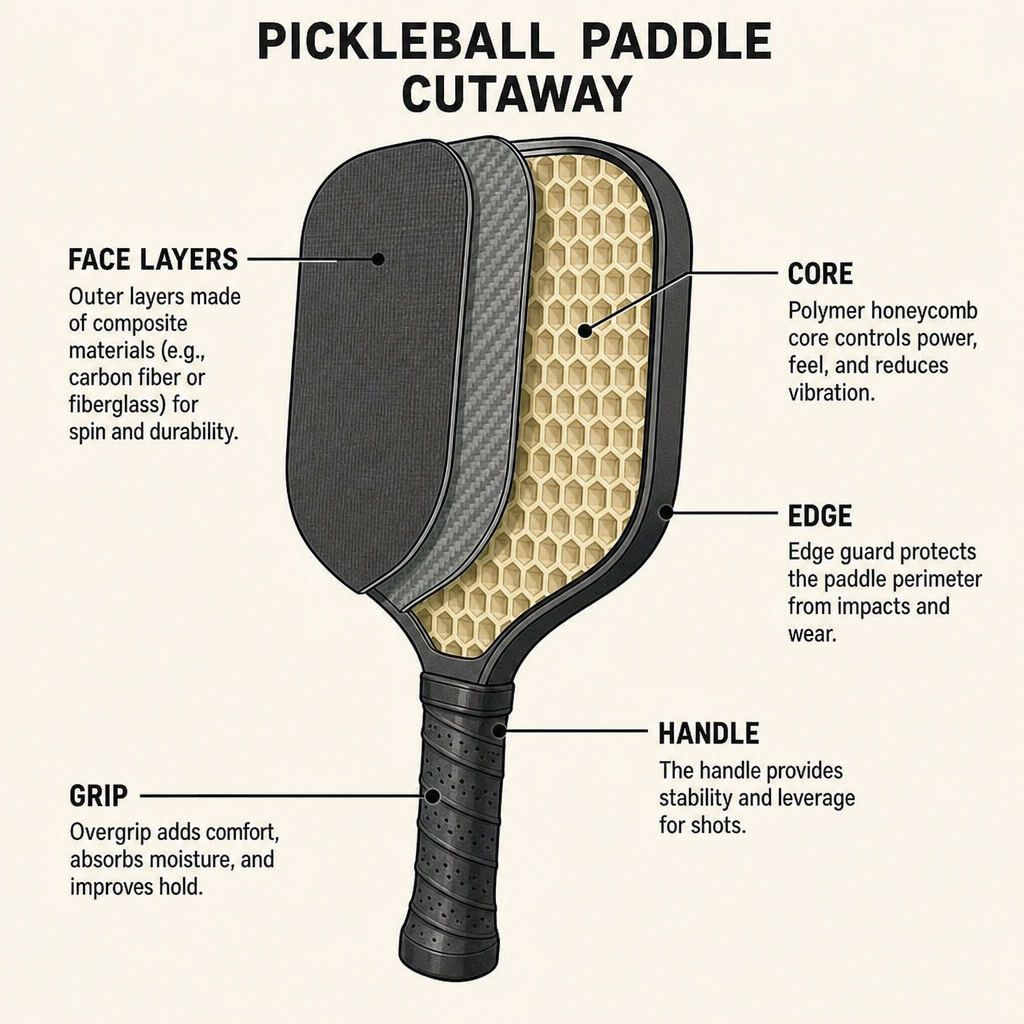
A pickleball paddle is built from two main performance areas: the face and the core. The face is the outer hitting surface, often made from carbon fiber or fiberglass, while the core is the internal structure that sits between the faces and influences feel, stability, sound, and energy response. These parts work together, so it is more useful to think in terms of complete material combinations than to judge one material by itself.
Most modern composite paddles use a layered design. The face provides the surface character of the paddle, including touch, feedback, and how the ball reacts off the strike zone. The core provides the inner support system, helping determine whether the paddle feels soft, lively, controlled, muted, or more direct.
A typical paddle also includes an edge guard or edge treatment, a handle, a grip, and finishing layers that hold the structure together. While these details matter, the face and core are the foundation of paddle performance. When players talk about different pickleball paddle materials, they are usually talking about the surface material, the core material, or the way those materials are combined.
Face materials and core materials are not the same thing
The face is the part of the paddle that contacts the ball, while the core is the internal body that supports that impact. Confusing the two can make material comparison difficult because a carbon fiber face and a PP honeycomb core, for example, are not competing materials; they are different parts of the same paddle. A complete paddle may combine a particular face material with one of several core options to create a specific playing feel.
Think of the face as the paddle’s surface personality and the core as its internal response system. A firmer face over a softer-feeling core will play differently than the same face over a more responsive core. Likewise, two paddles with the same core may feel different if one uses carbon fiber and the other uses fiberglass.
This distinction is important for players, retailers, and brands comparing types of pickleball paddle materials. It helps separate surface feel from internal construction and makes it easier to evaluate why two paddles that look similar may perform differently.
Carbon fiber paddle faces
Carbon fiber is commonly chosen for players who want a controlled, connected feel. It is known for a firm, refined response that can help players place shots with confidence, especially during resets, blocks, drops, and controlled drives. In many paddle designs, carbon fiber supports a more precise sensation at contact rather than an overly springy feel.
For players who value touch, this can be a major advantage. The surface tends to communicate the strike clearly, helping experienced players understand whether they contacted the ball cleanly or slightly off center. That feedback can make carbon fiber a strong choice for developing consistency and shot selection.
Carbon fiber also fits well in product ranges aimed at players who want a more performance-focused paddle. It is often associated with durability and a stable hitting experience, though actual longevity depends on total paddle construction, use conditions, care, and how often the paddle is played.
Fiberglass paddle faces
Fiberglass is often selected when a paddle is designed to feel more lively and accessible. Compared with carbon fiber, fiberglass can create a more energetic response, which some players describe as easier depth or a more responsive pop off the face. This can be appealing for newer players, doubles players who like quick exchanges, or anyone who wants help generating pace.
The tradeoff is that fiberglass may feel less controlled for players who prefer a very precise, muted response. That does not make it better or worse; it simply serves a different type of player. A fiberglass face can be a smart fit when comfort, easy response, and a fun playing feel are priorities.
Fiberglass also works well across recreational and mid-range paddle categories because it offers a familiar, approachable hitting sensation. In the right construction, it can support a balanced paddle for players still discovering whether they prefer power, control, or a blend of both.
Pickleball Paddle Materials Comparison at a Glance
The choice between carbon fiber and fiberglass usually comes down to feel and playing goals. Carbon fiber often favors control, feedback, and a more composed response. Fiberglass often favors liveliness, easy pace, and a more forgiving-feeling launch.
| Material | Paddle area | General feel | Common strengths | Best fit |
|---|---|---|---|---|
| Carbon fiber | Face | Controlled, firm, connected | Touch, placement, stable feedback | Intermediate to advanced players; control-focused designs |
| Fiberglass | Face | Lively, responsive, accessible | Easy depth, energetic response, approachable feel | Beginners, recreational players, balanced paddle ranges |
| PP honeycomb | Core | Balanced, familiar, supportive | Versatility, stable everyday play | Broad product ranges and all-around paddles |
| EPP | Core | Softer, cushioned, comfort-oriented | Reduced harshness, easy feel | Recreational, comfort-focused, or beginner-friendly paddles |
| MPP | Core | Responsive, structured, adaptable | Tunable feel depending on construction | Performance-focused or customized paddle designs |
This table is a practical starting point, not a guarantee of how every paddle will play. The final result depends on how the face, core, thickness, weight, shape, grip, and build quality come together.
Core options: PP honeycomb, EPP, and MPP
Core materials sit inside the paddle and influence how impact energy is absorbed, supported, or returned. They should be evaluated separately from face materials because the same carbon fiber or fiberglass surface can feel different depending on the core beneath it.
PP Honeycomb Cores: Traditional Cellular Construction
PP honeycomb cores are widely used because they can provide a balanced mix of support, feel, and versatility. The honeycomb structure helps create a stable internal framework without making the paddle feel overly harsh. For many players, this style of core offers a familiar all-around response suitable for both learning and competitive improvement.
A PP honeycomb core can pair well with either carbon fiber or fiberglass. With carbon fiber, it may support a more controlled and stable paddle. With fiberglass, it may help balance liveliness with enough structure for everyday play.
EPP Foam Cores: Expanded Polypropylene Technology
EPP cores are often associated with a softer and more cushioned feel. This can make a paddle feel comfortable and accessible, especially for players who want less harsh feedback on contact. It may be appealing for beginners, casual players, or anyone prioritizing ease of use over a sharply defined response.
Because EPP can feel more forgiving, it may work well in paddles designed for recreational play or comfort-focused product lines. However, the face material still matters. A lively face over an EPP core can feel different from a more controlled face over the same core.
MPP Foam Cores: Emerging Core Material Options
MPP cores are used when a paddle design calls for a more structured or responsive internal feel. Depending on how the paddle is built, MPP can support a performance-oriented response while still allowing room for customization through face material, thickness, and weight. It is best understood as a core option that can be tuned through the full construction rather than judged alone.
For product development or custom paddle planning, MPP may be considered when the goal is to create a specific feel for a defined player segment. As with any core, its strengths depend on the complete paddle design.
How do thickness, weight, and construction change paddle performance?
Thickness, weight, and construction determine how the selected materials actually feel during play. A paddle is not just a carbon fiber face or a PP honeycomb core; it is a complete system where small design choices can change control, swing speed, stability, and comfort.
A thicker-feeling paddle profile often supports more stability and a more cushioned response. Many players associate this with better control on blocks, drops, and resets. A thinner-feeling profile may feel quicker or more direct, depending on the full build.
Weight changes how the paddle moves through the air and how stable it feels at impact. A lighter-feeling paddle can be easier to maneuver during fast exchanges, while a heavier-feeling paddle may feel more planted through contact. The right choice depends on strength, swing style, and whether a player values hand speed, stability, or a balanced feel.
Construction quality also matters. Layer bonding, face consistency, edge design, handle feel, and grip comfort all influence the final experience. Even with the same listed materials, two paddles can feel noticeably different if their construction choices are different.
Material combinations that shape playing style
The most useful way to compare pickleball paddle materials durability outdoor play longest lasting considerations is to look at the complete build rather than one component. Outdoor play can expose paddles to repeated impacts, temperature changes, moisture, dust, and court abrasion. A longer-lasting paddle depends on suitable materials, careful construction, proper use, and reasonable care.
Common combinations include:
- Carbon fiber face with PP honeycomb core: A strong all-around option for players who want control, feedback, and dependable versatility.
- Fiberglass face with PP honeycomb core: A balanced recreational or intermediate option with a lively surface and supportive internal feel.
- Carbon fiber face with EPP core: A control-oriented surface paired with a softer internal response for comfort and touch.
- Fiberglass face with EPP core: A user-friendly combination for players who want easy response and a more cushioned feel.
- Carbon fiber or fiberglass face with MPP core: A flexible platform for more specific paddle performance goals, depending on thickness, weight, and finishing choices.
For outdoor play, players should also consider storage and care. Avoid leaving paddles in extreme conditions for long periods, keep the face clean with gentle methods, and inspect edge areas for wear. Material choice matters, but care habits also influence how long a paddle feels and plays its best.
Which paddle materials should different players choose?
Beginners usually benefit from a paddle that feels easy to swing, comfortable on contact, and forgiving enough for learning basic strokes. Fiberglass with a PP honeycomb or EPP core can be a practical starting point because it supports accessible response without requiring a highly refined swing. A balanced weight and comfortable grip are just as important as the face material.
Intermediate players often know whether they want more control, more pace, or a blend. Carbon fiber with PP honeycomb can suit players working on placement and consistency, while fiberglass with a supportive core can suit players who enjoy a more responsive feel. This level is where material comparison becomes especially useful because preferences become clearer.
Advanced players tend to notice smaller differences in face feedback, core response, swing weight, and stability. They may prefer carbon fiber for precision or choose a specific fiberglass build for added liveliness. Advanced choices should focus on how the complete paddle supports strategy, not just on the material name.
For product ranges, the same logic applies:
- Entry-level ranges: Prioritize comfort, durability-minded construction, and accessible response.
- Recreational ranges: Use materials that create easy playability for a wide audience.
- Intermediate ranges: Offer clearer distinctions between control-focused and lively-feeling builds.
- Performance-focused ranges: Pair face, core, thickness, and weight around specific playing styles.
- Custom ranges: Let players or programs match materials to preferred feel, appearance, and use case.
A practical checklist before choosing
Before selecting from different pickleball paddle materials, ask what the paddle needs to do for the player. A good choice should match skill level, playing environment, and feel preference instead of chasing a single “best” material.
Use this checklist:
- Do you want a more controlled feel or a more lively response?
- Is comfort more important than crisp feedback?
- Will the paddle be used mostly for casual games, training, club play, or competitive matches?
- Does the player need quick hand speed, more stability, or a balanced swing?
- Is the product intended for beginners, improving players, advanced users, or a custom program?
- Are outdoor durability and care expectations clearly understood?
When these answers are clear, paddle construction decisions become easier. Carbon fiber, fiberglass, PP honeycomb, EPP, and MPP are not isolated choices; they are tools for creating the right playing experience.
Final thoughts on material selection
The best paddle is the one whose materials work together for the intended player. Carbon fiber generally supports control and connected feedback, while fiberglass generally supports a livelier and more accessible response. PP honeycomb, EPP, and MPP cores then shape the internal feel, giving each paddle its own balance of comfort, stability, and response.
For players, understanding the types of pickleball paddle materials makes it easier to choose confidently. For product planning, it helps align material choices with real user needs across beginner, recreational, intermediate, advanced, and custom segments. To explore personalized build options, visit QIYRO SPORTS’ Custom Pickleball Paddles collection.